News
What Is Chromatography? A Practical Guide for Life-Science Labs
Chromatography is a key technique for separating, analyzing, and purifying biomolecules in life science laboratories. Discover the main chromatography methods, their applications, and how agarose resins support efficient protein, antibody, and nucleic acid purification workflows.
Read moreIon Exchange Chromatography with Agarose Beads in Antibody Purification
ABT agarose beads provide reliable performance in ion exchange chromatography, ensuring high protein binding, precise separation of charge variants, and reproducible results from lab-scale analysis to industrial antibody purification.
Read moreABT at Analytica 2026: Advancing Bioprocessing Innovation in Munich
From March 24–27, ABT will be showcasing its expertise in agarose-based resins and custom chromatography solutions at Analytica 2026 in Munich, Germany. Visit us to explore how our advanced purification technologies can support scalable and high-quality bioprocess workflows. Our team will be on-site to discuss tailored solutions designed for pharmaceutical and biotech leaders seeking robust, reproducible, and high-performance results.
Read moreABT to Attend Bioprocessing Summit Europe 2026: High-Performance Agarose Resins for Downstream Processing

ABT will attend Bioprocessing Summit Europe 2026 in Barcelona. Discover how our agarose chromatography resins support scalable, robust downstream processing from early development to GMP manufacturing.
Read moreNext Stop: BPI Boston 2025!
ABT returns to Bioprocess International Boston, where the future of bioprocessing from cell line and cell culture to downstream and next generation manufacturing, is showcased.
Read moreWhat Is Chromatography? A Practical Guide for Life-Science Labs
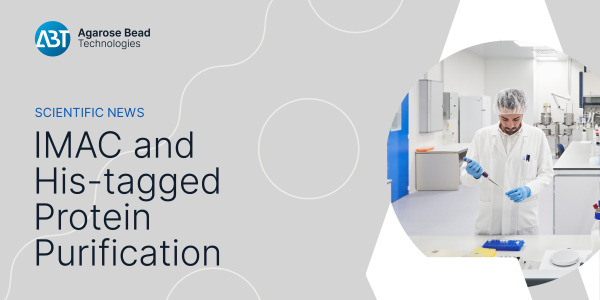
Chromatography is a family of laboratory separation techniques used to separate the components of a mixture based on how differently they interact with a stationary phase and a mobile phase. In life-science labs, chromatography underpins both analytical testing and biomolecule purification, often using packed columns where porous resins (including agarose-based matrices) serve as a common stationary phase.
Chromatography is not one single method. It includes multiple “families,” which can be grouped by platform (for example, liquid chromatography vs gas chromatography) and by separation mechanism (for example, ion exchange vs affinity). Understanding both perspectives helps you choose methods that fit your sample, goals, and constraints.
The core idea: separation by differential interactions
All chromatography relies on the same principle: different molecules spend different amounts of time interacting with the stationary phase versus moving with the mobile phase. Those differences create different migration speeds, which causes components to separate in space (along a column or plate) and time (as they elute at different moments).
What drives “differential interaction” depends on the method—charge, hydrophobicity, size, or highly specific binding—but the logic is consistent: separation happens because the system creates repeatable, measurable differences in how long molecules are retained and when they elute.
Stationary phase vs mobile phase (and what each one does)
- Stationary phase: the material that stays in place and provides the interaction surface. In practice this might be porous resin beads packed in a column, an inner capillary coating in gas chromatography, or a thin layer on a TLC plate.
- Mobile phase: the fluid that moves through or across the stationary phase and carries the sample. In practice this could be an aqueous buffer (common in biomolecule separations), an organic solvent mixture, or an inert gas (in GC).
The stationary phase creates retention (interaction), while the mobile phase controls transport (movement) and strongly influences interaction conditions (for example, pH, ionic strength, and solvent composition).
Retention, elution, and detection what changes during a run
- Retention describes how strongly or how long a compound interacts with the stationary phase relative to the mobile phase. More retention generally means later elution.
- Elution is the process of washing components off the stationary phase so they exit the system. Conceptually, elution conditions can be held constant (isocratic) or changed over time (gradient) to adjust interaction strength and improve separation across a broader mixture.
- Detection is how you observe or quantify what is eluting. Detectors typically measure a physicochemical signal such as UV absorbance, fluorescence, mass-to-charge (MS), or conductivity (common for some ion-based separations). The detector doesn’t “know” identity by itself unless paired with additional information (for example, MS or standards); it reports signals that you interpret in context.
Why labs use chromatography (analytical vs preparative goals)
Chromatography is used for two distinct purposes that often share tools but differ in priorities:
- Analytical chromatography focuses on identifying, quantifying, and assessing purity. Typical outcomes include peak retention times, peak areas, impurity profiles, and comparability between samples.
- Preparative chromatography focuses on purifying and recovering material (for example, a protein or oligonucleotide) in usable form for downstream assays, structural studies, or process development.
Common life-science use cases include:
- Protein purification from lysates or conditioned media
- Desalting and buffer exchange prior to downstream assays
- Separation of peptides or oligonucleotides for characterization or cleanup
- Monitoring and controlling impurities during development or production workflows
What “good separation” means: resolution, selectivity, and capacity
In practical terms, chromatography performance is often judged by:
- Resolution: how clearly components separate (well-separated peaks/fractions are easier to interpret and collect).
- Selectivity: how differently the stationary phase “treats” your target vs impurities (higher selectivity reduces co-elution and improves purity at a given effort).
- Capacity (loading): how much sample you can load before separation degrades (overloading can broaden peaks, increase co-elution, and reduce recovery).
These ideas directly affect method and resin decisions. For example, you might accept lower capacity for higher resolution in an analytical method, while a preparative workflow often balances capacity and recovery against acceptable purity.
The main chromatography platforms you’ll encounter
Chromatography is often first described by platform—how the separation is physically implemented and what kinds of samples it suits. Platform helps you quickly rule in/out major categories based on volatility, stability, and compatibility.
Liquid chromatography (LC/HPLC/UHPLC) for biomolecules and small molecules
Liquid chromatography dominates life science because it supports aqueous buffers, controlled pH and salt conditions, and compatibility with many biomolecules. It’s widely used for both analytical testing and purification, including proteins and nucleic acids (with method-dependent constraints).
In purification-oriented LC, the stationary phase is often a packed bed of porous resin beads, and agarose-based resins are a common choice for biomolecule separations because they provide a hydrophilic, water-compatible matrix that can be functionalized for different mechanisms.
Gas chromatography (GC) for volatile, thermally stable compounds
Gas chromatography is best suited for volatile, thermally stable compounds that can be vaporized without decomposition. Because many proteins and large biomolecules are not volatile and can denature or decompose under GC conditions, GC is typically not the first choice for most protein purification tasks.
Thin-layer chromatography (TLC) for rapid screening
TLC is a simple, fast format used mainly for rapid qualitative checks (for example, reaction monitoring or quick mixture assessment). It provides a visual readout and can be very useful for screening conditions, but it is generally not a primary tool for high-purity recovery of sensitive biomolecules.
Separation mechanisms (the “why” behind different resin types)
Mechanism describes what property drives separation. This is often the most actionable way to select a method for a new target because it links your sample’s characteristics to binding behavior and elution strategy.
Below, each mechanism is summarized by: what it separates, when it’s useful, and a typical limitation.
Affinity chromatography (specific binding to a ligand)
Affinity chromatography separates molecules by highly specific binding between a target and an immobilized ligand (for example, tag-based capture, antibody/antigen interactions, or other designed affinities). It often delivers high purity quickly because selectivity is built into the chemistry.
A typical limitation is dependence on the ligand chemistry and compatibility of binding/elution conditions with your target’s stability and downstream use. Materials and ligands can also be more specialized and resource-intensive than more general mechanisms.
Ion exchange chromatography (IEX) for charge-based separation
Ion exchange separates based on net charge interactions between the molecule and charged groups on the stationary phase. The two major modes are:
- Anion exchange (binds negatively charged species under appropriate conditions)
- Cation exchange (binds positively charged species under appropriate conditions)
Binding and elution are strongly influenced by pH (which affects molecule charge) and ionic strength (salt competes with electrostatic interactions). IEX is widely used for both capture and polishing because it can be tuned to separate closely related variants. A common limitation is sensitivity to buffer composition and the need for careful condition selection to avoid weak binding or unintended co-elution.
Size exclusion chromatography (SEC) for size-based separation and buffer exchange
SEC separates molecules by apparent size in solution using porous beads: larger species are excluded from pores and elute earlier, while smaller species access more pore volume and elute later. SEC is frequently used for desalting/buffer exchange, removing aggregates, and final polishing.
A key limitation is that SEC’s resolving power depends on the resin’s fractionation range, and loading capacity is typically lower than binding methods. SEC is excellent for certain tasks, but it is not a universal high-capacity purification step.
Hydrophobic interaction chromatography (HIC) for gentle hydrophobicity differences
HIC separates based on surface hydrophobicity under conditions that encourage hydrophobic interactions—often using higher salt to promote binding, then reducing salt to elute. It can be a useful, relatively gentle option for proteins when you need an additional selectivity dimension beyond charge.
Typical limitations include dependence on salt conditions (which may constrain downstream steps) and selectivity that can vary significantly across protein classes and formulations.
Reversed-phase chromatography (RP) for high-resolution small molecules and peptides
Reversed-phase chromatography provides strong, high-resolution separation for small molecules and many peptides, typically using a hydrophobic stationary phase and increasing organic solvent to elute. RP is widely used for analytical workflows and peptide separations.
For many intact proteins, RP conditions can be denaturing due to organic solvents and other method requirements. RP can be appropriate in some protein contexts (for example, certain analytical applications), but compatibility should be evaluated against stability and functional readouts.
Where agarose resins fit in bioseparations (and why they’re widely used)
In bioseparations, agarose resins are widely used as porous, hydrophilic stationary-phase matrices that support aqueous buffers and biomolecule-friendly conditions. Agarose beads can be functionalized to support multiple mechanisms—commonly affinity, ion exchange, hydrophobic interaction, and size-based workflows—so the same base matrix can serve different purification goals depending on surface chemistry and pore structure.
Their popularity in purification stems from practical advantages in many lab settings: compatibility with biomolecules, adaptable chemistries, and established method “patterns” that translate well from research to process development (with appropriate validation and controls).
What “agarose beads” are (in practical terms)
Agarose beads are best understood as a porous hydrogel: water-swollen, bead-shaped particles with internal pore networks. The pores create a large internal surface area for interactions and determine which molecules can enter and how they move through the bead structure.
Practically, “porosity” influences:
- Access: whether molecules can enter the bead (relevant to SEC fractionation ranges and to binding capacity in many modes)
- Mass transfer: how quickly molecules can reach binding sites
- Flow behavior: how easily liquid passes through a packed bed at usable flow rates
Key properties scientists care about: pore size, bead size, and mechanical stability
- Pore size (or fractionation range): affects which sizes are separated (SEC) and how accessible binding sites are for large biomolecules in other modes.
- Bead size: smaller beads often improve resolution and mass transfer but can increase resistance to flow (higher backpressure). Larger beads may be more forgiving for flow but can reduce resolving power.
- Mechanical stability: stronger beads better tolerate higher flow, packing stress, and scaling demands. Mechanical stability can become especially important when moving from gentle bench conditions to larger columns or more demanding throughput targets.
Trade-offs are normal. There is rarely a single “best” resin—selection should reflect the molecule, required purity, and practical constraints (instrument pressure limits, column format, reproducibility expectations).
Typical applications: protein capture, polishing, and desalting workflows
Agarose-based resins commonly appear across end-to-end protein purification workflows:
- Capture (high selectivity, early step)
Often achieved with affinity resins when a specific binding interaction is available.
- Polishing (remove closely related impurities/variants)
Frequently uses IEX and/or HIC to add orthogonal selectivity after capture.
- Desalting / aggregate management / final cleanup
Often uses SEC to separate aggregates, perform buffer exchange, or improve final homogeneity.
A simple “goal → mechanism” map (general guidance):
- Fast enrichment of a specific target → Affinity
- Separate charge variants or remove charged impurities → IEX
- Add hydrophobicity-based selectivity without harsh solvents → HIC
- Remove aggregates or exchange buffer → SEC
How to choose a chromatography approach (a decision checklist)
Choosing a chromatography approach is easier when you separate the decision into sample realities, project goals, and implementation constraints. The checklist below is meant to guide method selection without turning into a one-size-fits-all recipe.
- What is the molecule class and what threatens its stability?
- What is the true goal: identification, purity, recovery, speed, or scalability?
- What constraints are fixed (equipment limits, acceptable buffers, downstream assays)?
- Which separation mechanism most directly exploits differences between target and impurities?
- What will you measure to decide whether a fraction is “good enough” to keep moving forward?
Start with the sample: molecule type, stability, and constraints
Start by characterizing what you’re separating and what conditions it tolerates:
- Protein vs nucleic acid vs small molecule: determines likely platforms and compatible mechanisms.
- Stability constraints: sensitivity to pH, ionic strength, temperature, organic solvents, or specific additives (for example, some detergents).
- Matrix effects: viscosity, particulates, host-cell contaminants, nucleic acids, or lipids can affect flow and binding behavior.
- Downstream compatibility: buffers and additives must be compatible with the next assay (activity readout, structural methods, detection method, or storage formulation).
A method that looks “perfect” on paper can fail in practice if it conflicts with stability or downstream requirements.
Define the goal: purity, yield, speed, or scalability
Most workflows can’t maximize every metric simultaneously. Defining the primary goal helps you choose mechanisms and where to spend optimization effort.
- If your goal is speed and robustness, you may prioritize a reliable capture step and accept less aggressive polishing.
- If your goal is highest purity or homogeneity, you may invest more in orthogonal polishing (for example, IEX followed by SEC).
- If your goal is scalability, you may favor methods and materials that remain predictable under higher loading and flow constraints.
Thinking in terms of capture vs polishing clarifies trade-offs: capture emphasizes selective enrichment; polishing emphasizes removing similar impurities and improving final quality.
Practical constraints: pressure limits, column format, and reproducibility
Method feasibility depends on system and format constraints:
- Backpressure limits can constrain bead size and flow choices.
- Column format matters: prepacked columns often improve reproducibility, while self-packed columns can be flexible but introduce packing variability.
- Reproducibility needs increase in regulated or process-adjacent settings, where documentation, lot-to-lot consistency, and defined QC expectations can be as important as raw separation performance.
How to choose a chromatography approach (a decision checklist)
Even when the details vary, many purification workflows follow a common logic: prepare the sample so it behaves predictably, use a selective step to enrich the target, apply orthogonal steps to remove remaining impurities, and finish with buffer exchange/formulation aligned to downstream use.
Crucially, the workflow is guided by measurements (chromatograms, fraction analytics, and functional readouts), not assumptions. What you measure determines what you do next.
Capture → polish → buffer exchange: what each stage is for
- Capture: enrich the target from a complex mixture and remove bulk contaminants (often affinity or sometimes IEX).
- Polish: remove remaining impurities that behave similarly to the target (commonly IEX and/or HIC; sometimes additional orthogonal methods).
- Buffer exchange / final conditioning: move into a buffer suitable for downstream assays, storage, or formulation (often SEC or desalting formats, depending on requirements).
These stages are conceptual. A real workflow may combine or repeat them depending on purity targets and constraints.
How to evaluate fractions (without overcomplicating it)
Fraction evaluation should match your molecule and purpose. Common tools include:
- UV absorbance as a broad indicator of elution and relative quantity
- SDS-PAGE for protein purity patterns (and to detect co-eluting species)
- Activity assays when function matters (because “pure-looking” is not always “active”)
- Mass spectrometry or other confirmatory methods when identity or variants must be verified
No single metric fits every situation. Align fraction acceptance criteria to your downstream use and quality expectations.
Frequently asked questions
What’s the difference between chromatography and electrophoresis?
Chromatography separates compounds by how differently they interact with a stationary phase while being carried by a mobile phase; electrophoresis separates by motion in an electric field, often through a gel or capillary. Electrophoresis is commonly analytical for nucleic acids and proteins, while chromatography is used for both analysis and preparative purification depending on format and scale.
Is HPLC the same as liquid chromatography?
Liquid chromatography (LC) is the broad family of separations performed in the liquid phase. HPLC (and UHPLC) are subtypes of LC that use higher pressure and more efficient columns to improve speed and resolution. In papers and everyday lab use, “LC” may describe the general method, while “HPLC/UHPLC” specifies instrument capability and performance.
Which chromatography is best for protein purification?
There is no single best method for all proteins; the choice depends on the target, impurities, and required purity and recovery. A common strategy is affinity chromatography for capture when specific binding is available, followed by ion exchange or hydrophobic interaction for polishing, and size exclusion for aggregate removal or buffer exchange. Final choices should reflect stability and downstream requirements.
What is an agarose resin and when should I use it?
An agarose resin is a porous, hydrophilic bead matrix used as a stationary phase in biomolecule chromatography. It is widely used because it supports aqueous buffers and can be functionalized for affinity, ion exchange, hydrophobic interaction, or size-based separations. Agarose resins are often chosen when maintaining biomolecule compatibility and predictable flow behavior is important.
How do I choose between ion exchange and affinity chromatography?
Affinity chromatography is highly selective when a suitable ligand or tag-specific interaction exists, often giving rapid enrichment with fewer steps. Ion exchange is broadly applicable and tunable via pH and ionic strength, making it useful for both capture and polishing even without tags. The best choice depends on selectivity needs, target stability under conditions, workflow time, and resource constraints.
Why is my column backpressure increasing?
Increasing backpressure often reflects restricted flow from particulates, precipitates, fouling from complex samples, or suboptimal packing and compatibility conditions. High-level responses include improving sample clarification, verifying buffer compatibility, checking filtration practices, and following the column/resin manufacturer’s guidance for limits and maintenance. Avoid improvised fixes and consult institutional safety procedures for pressurized systems.
Can chromatography be scaled from bench to pilot/production?
Yes, but scaling changes practical constraints and quality expectations. Flow, pressure limits, packing quality, and reproducibility become more critical, and methods may require additional development to preserve performance at higher loads. In process-adjacent settings, documentation, defined acceptance criteria, and QC/validation practices often become central to ensuring consistent outcomes across runs and lots.
What safety precautions should I take when running chromatography?
Treat chromatography as a chemical and mechanical hazard activity: consult SDS for all reagents, follow your institution’s EHS procedures, use PPE defined by local protocols, and ensure proper ventilation for volatile solvents. Pressurized systems should only be operated within rated limits and maintained according to manufacturer guidance. Waste must be segregated and disposed of per regulatory and institutional rules.
What does a CoA/QC package mean for chromatography resins?
A Certificate of Analysis (CoA) and related QC documentation summarizes measured quality attributes for a resin lot (for example, identity, key performance indicators, and acceptance criteria defined by the manufacturer). This documentation supports traceability and reproducibility, especially in regulated or process-development contexts. Always interpret CoA results in relation to your specific method requirements and validation plan.
Do I need to clarify or filter samples before chromatography?
Generally speaking, clearer samples reduce the risk of fouling, rising backpressure, and unpredictable binding behavior, particularly with complex matrices. The appropriate approach depends on sample type, column format, and institutional biosafety requirements. Use methods consistent with your lab’s protocols and the column/resin manufacturer’s guidance, and ensure any pre-treatment is compatible with target stability and downstream assays.
- Wallace et al.,Instability of the HLA-E peptidome of HIV presents a major barrier to therapeutic targeting, Molecular Therapy (2024).
- Strong, R.K., Holmes, M.A., Li, P., Braun, L., Lee, N., and Geraghty, D.E. (2003). HLA-E Allelic Variants correlating differential expression, peptide affinities, crystal structures, and thermal stabilities. J. Biol. Chem. 278, 5082–5090.
- Sauter, J., Putke, K., Schefzyk, D., Pruschke, J., Solloch, U.V., Bernas, S.N., Massalski, C., Daniel, K., Klussmeier, A., Hofmann, J.A., et al. (2021). HLA-E typing of more than 2.5 million potential hematopoietic stem cell donors: Methods and population-specific allele frequencies. Hum. Immunol. 82, 541–547.